
Cloud Networking Certifications in 2026:
AWS Advanced Networking vs Azure AZ-700
AWS is retiring its networking specialty exam on December 31, 2026, so choosing the right cloud networking certifications matters more now. Here’s a plain comparison of AWS, Azure and Google options, with costs, difficulty and a study plan.
Before You Start
Table of Contents
Quick Answer: Which Cloud Networking Certification
Should You Choose?
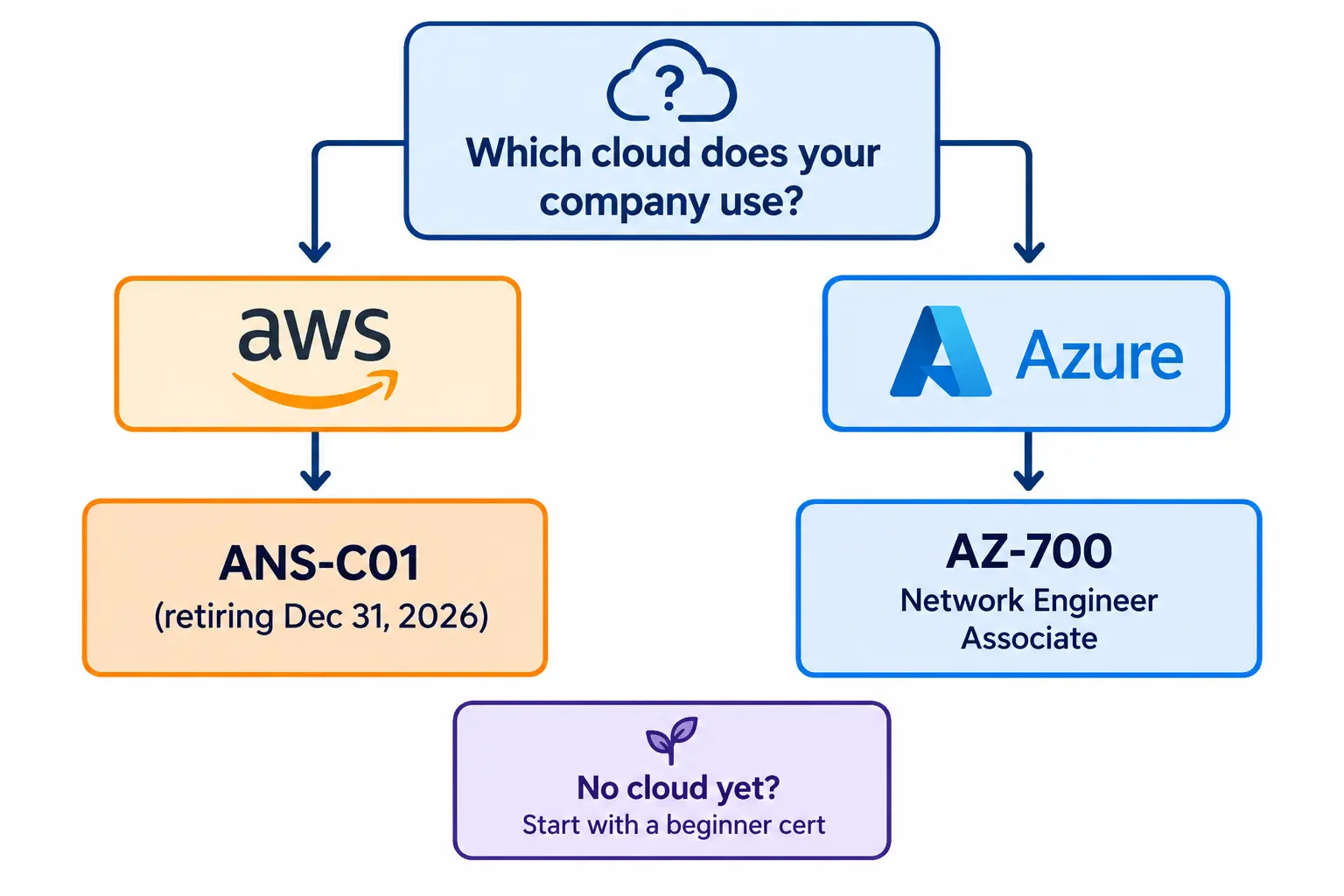
For cloud networking certifications, go with the cloud your employer uses. On Azure? Take AZ-700. On AWS? Learn AWS networking, and sit the ANS-C01 only if you can pass it before December 31, 2026. Brand new to cloud? Start with a basic cloud exam, not a specialty one.
Cloud Networking Certifications Compared
Cloud networking certifications show you can build and fix networks inside a cloud platform. Think private networks, VPNs, load balancers, firewalls and links back to an office.
| AWS Advanced Networking (ANS-C01) | Azure AZ-700 | Google Professional Cloud Network Engineer | |
|---|---|---|---|
| Level | Specialty | Associate | Professional |
| Exam length | 170 minutes | 100 minutes | 2 hours |
| Questions | 65 | Varies | 50 to 60 |
| Fee (USD) | $300 | $165 (US price) | $200 plus tax |
| Suggested experience | 5 years | Hands-on Azure experience | 3+ years in IT, 1+ on Google Cloud |
| Renewal | Valid for 3 years | Free online renewal every 12 months | Check Google’s renewal page |
| Status | Retiring Dec 31, 2026 | Active | Active |
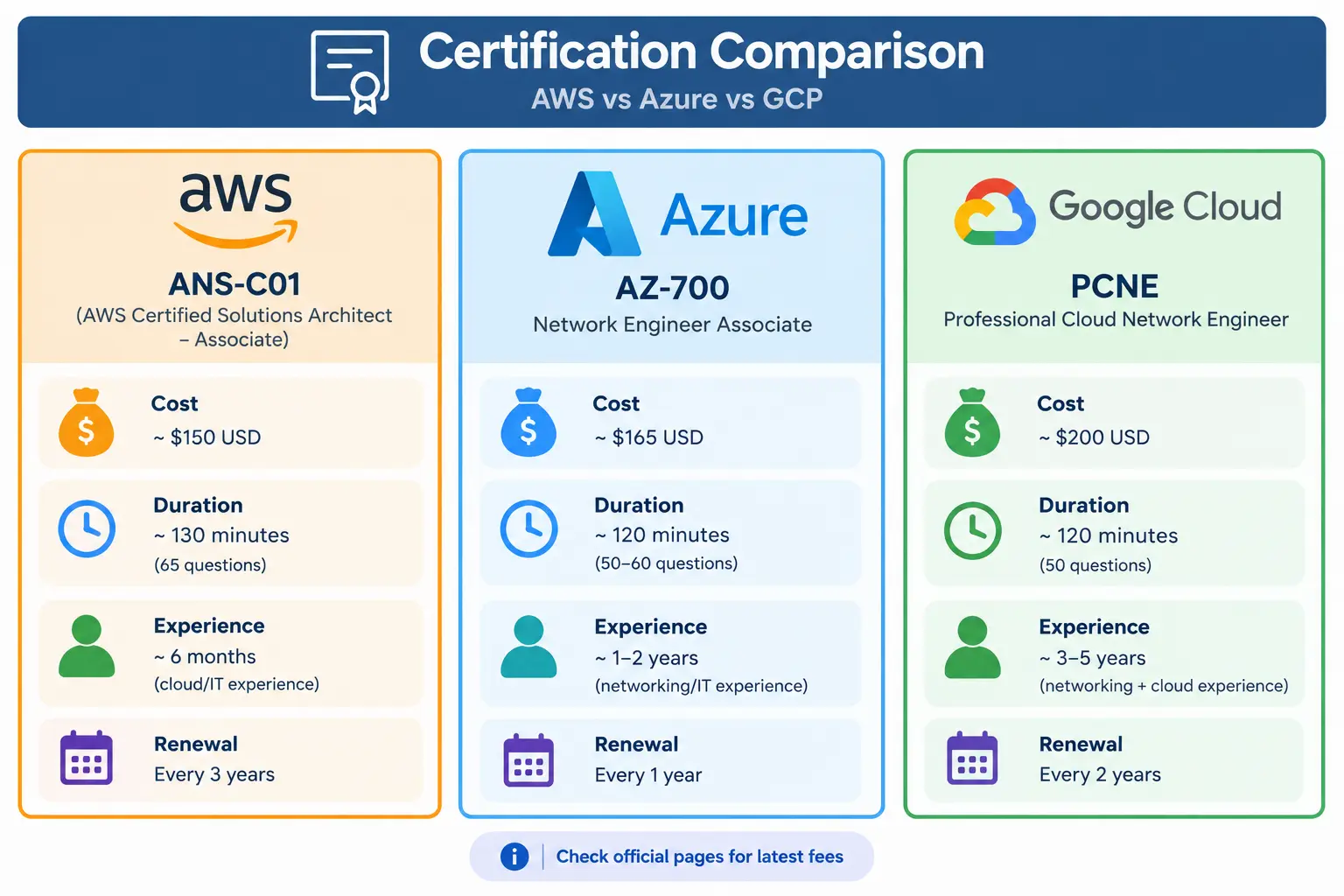
Fees vary by country. Check the official AWS, Microsoft and Google Cloud pages before booking.
Picture this: you’re a network engineer at a bank that runs on Azure. Among all cloud networking certifications, AZ-700 will help you far more than an AWS exam, even though AWS is the bigger cloud overall.
AWS Advanced Networking Specialty (ANS-C01)
This is the toughest of the three. AWS suggests around five years of hands-on experience designing AWS networks, and people who’ve taken it often call it hard even for seasoned engineers.
Exam Retirement: What It Means for You
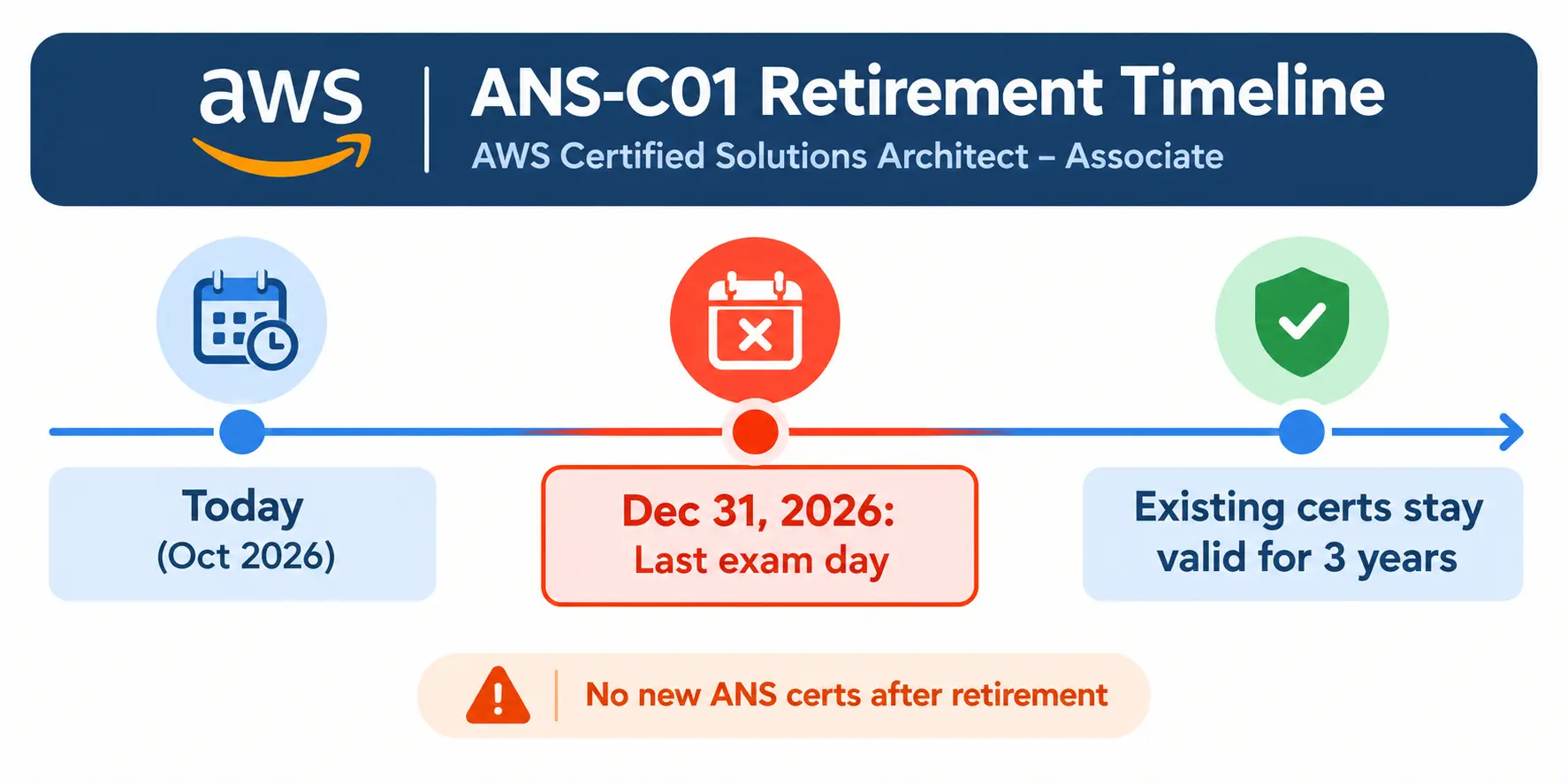
AWS says the last day to take the exam is December 31, 2026. In practice:
- Already passed? Your certification stays valid for its normal three years.
- Not yet passed? You can still book until the last date.
- After the deadline: AWS won’t issue new ANS certifications.
Exam Format, Domains and Difficulty
You get 65 questions (multiple choice and multiple response) and 170 minutes. The questions are long and story-based. A typical one might read: a company has 40 VPCs and an office linked by Direct Connect, traffic must be inspected, and IP ranges overlap. What do you build?
Topics you’ll meet again and again:
- VPC design and IP planning
- VPN and Direct Connect links
- Transit Gateway routing
- DNS with Route 53
- Security and traffic inspection
Should You Still Take It?
Take it if you already work with AWS networks daily, you can study hard for the next few weeks, and you want proof of deep skills for a promotion.
Skip it if you’re new to cloud or can’t prepare before the deadline. That’s fine, because other cloud networking certifications are still open to you. The skills still matter, and AWS Skill Builder has free learning paths. I couldn’t find any announced replacement exam in the sources I reviewed, so check AWS’s certification page for news.
Azure Network Engineer Associate (AZ-700)
Lots of people search for an “Azure network specialty.” Azure doesn’t use that name. The real credential is Azure Network Engineer Associate, and you earn it by passing AZ-700. Being associate level, it’s a more realistic target than the AWS specialty.
Exam Format, Cost and Renewal
- Time: 100 minutes
- Fee: $165 in the US (varies by country)
- Retake: 24 hours after a first failed attempt
- Renewal: Free online assessment on Microsoft Learn, every 12 months
- Languages: English, German, Spanish, French, Italian, Japanese, Korean, Portuguese (Brazil), Chinese (Simplified and Traditional)
It covers five areas:
- Core network setup
- Connectivity between networks
- Application delivery
- Private access to Azure services
- Network security
Microsoft gives away a practice assessment and an exam sandbox, so try both before test day.
Azure Networking Basics
New to Azure? Start with these:
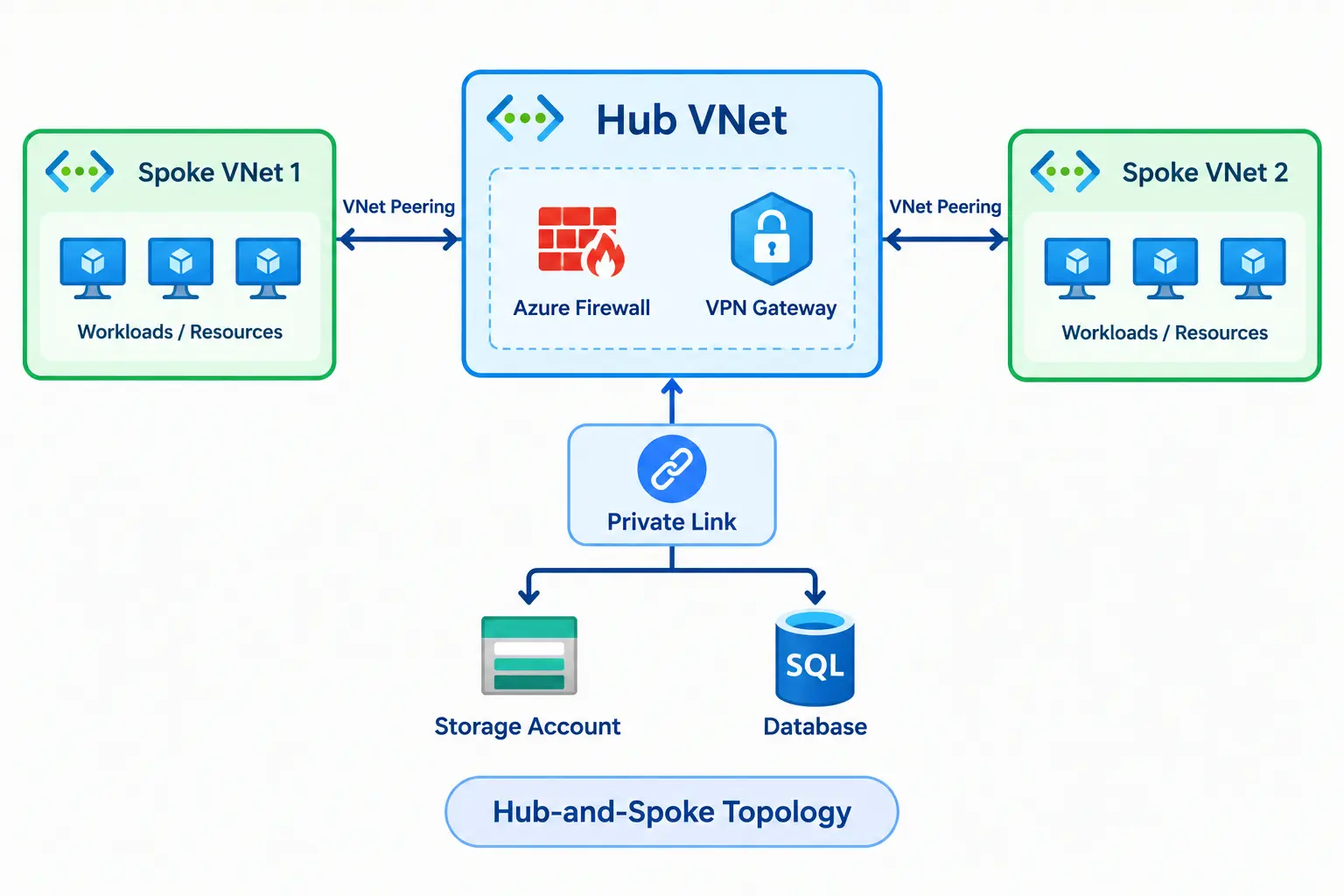
- Virtual Network (VNet): your private network in Azure, like an office LAN in the cloud.
- Peering: links two VNets so they can talk privately.
- VPN Gateway: an encrypted tunnel between Azure and your office.
- Load Balancer and Application Gateway: both spread traffic across servers. Application Gateway also understands web (HTTP) traffic.
- Azure Firewall: filters what comes in and goes out.
- Private Link: reaches services like storage over a private address, not the public internet.
Here’s how they fit together. An online shop keeps its web servers in one VNet and its database in another. Peering joins them, the firewall checks traffic, and Private Link keeps the database off the public internet.
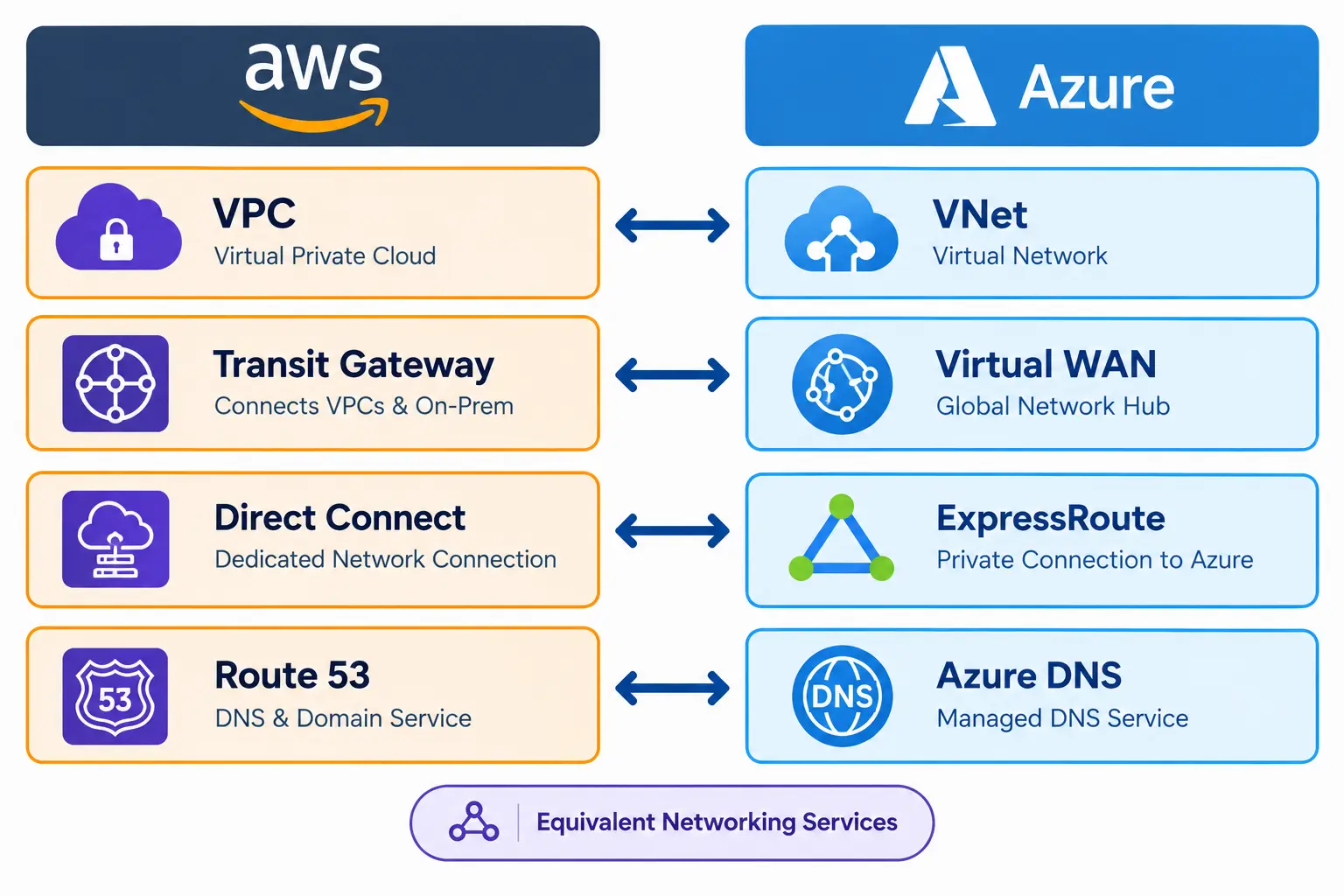
AWS vs Azure Networking Services
Know one cloud? This table speeds up learning the other. The services are close cousins, not twins.
| What it does | AWS | Azure |
|---|---|---|
| Private network | VPC | Virtual Network |
| Connect many networks | Transit Gateway | Virtual WAN |
| Private line to your office | Direct Connect | ExpressRoute |
| Encrypted tunnel over internet | Site-to-Site VPN | VPN Gateway |
| DNS | Route 53 | Azure DNS |
| Web protection | AWS WAF | Azure WAF |
| DDoS protection | AWS Shield | Azure DDoS Protection |
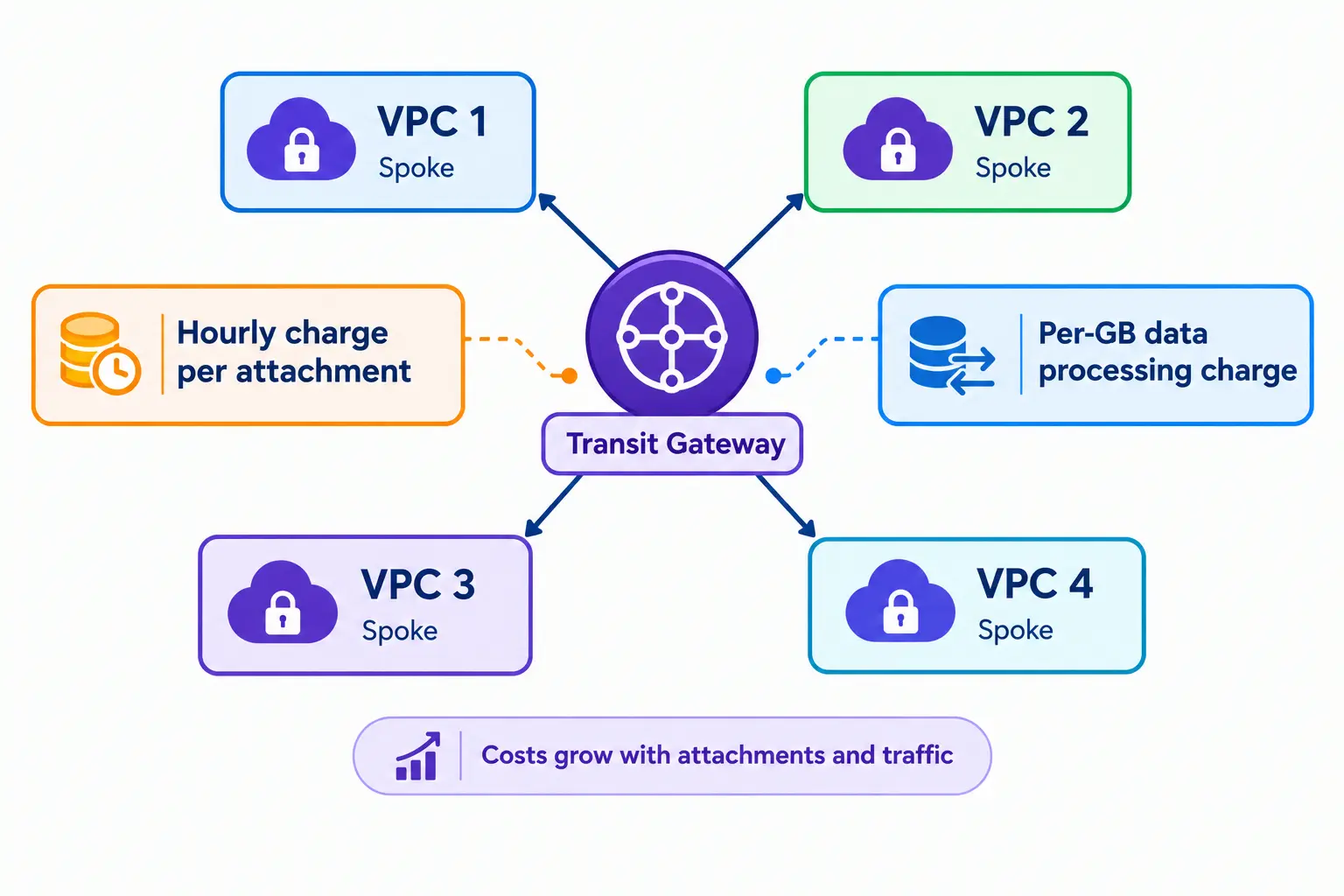
AWS Transit Gateway Cost Explained
People often get surprised by this bill. Transit Gateway is a central hub joining many VPCs and office networks, and you pay in two ways:
- Attachment charge: hourly, for each VPC or VPN attached.
- Data processing charge: per GB that flows through.
Think of a company that copies backups between VPCs every night. Each GB crosses the hub, so each GB costs money. Add dozens of attachments and the total climbs fast.
Simple ways to cut it:
- Attach only the VPCs that truly need to talk.
- Keep heavy traffic inside one VPC where you can.
- Use VPC peering for two VPCs that swap lots of data.
- Check your bill and traffic reports monthly.
Rates change by region and over time, so see the official AWS Transit Gateway pricing page.
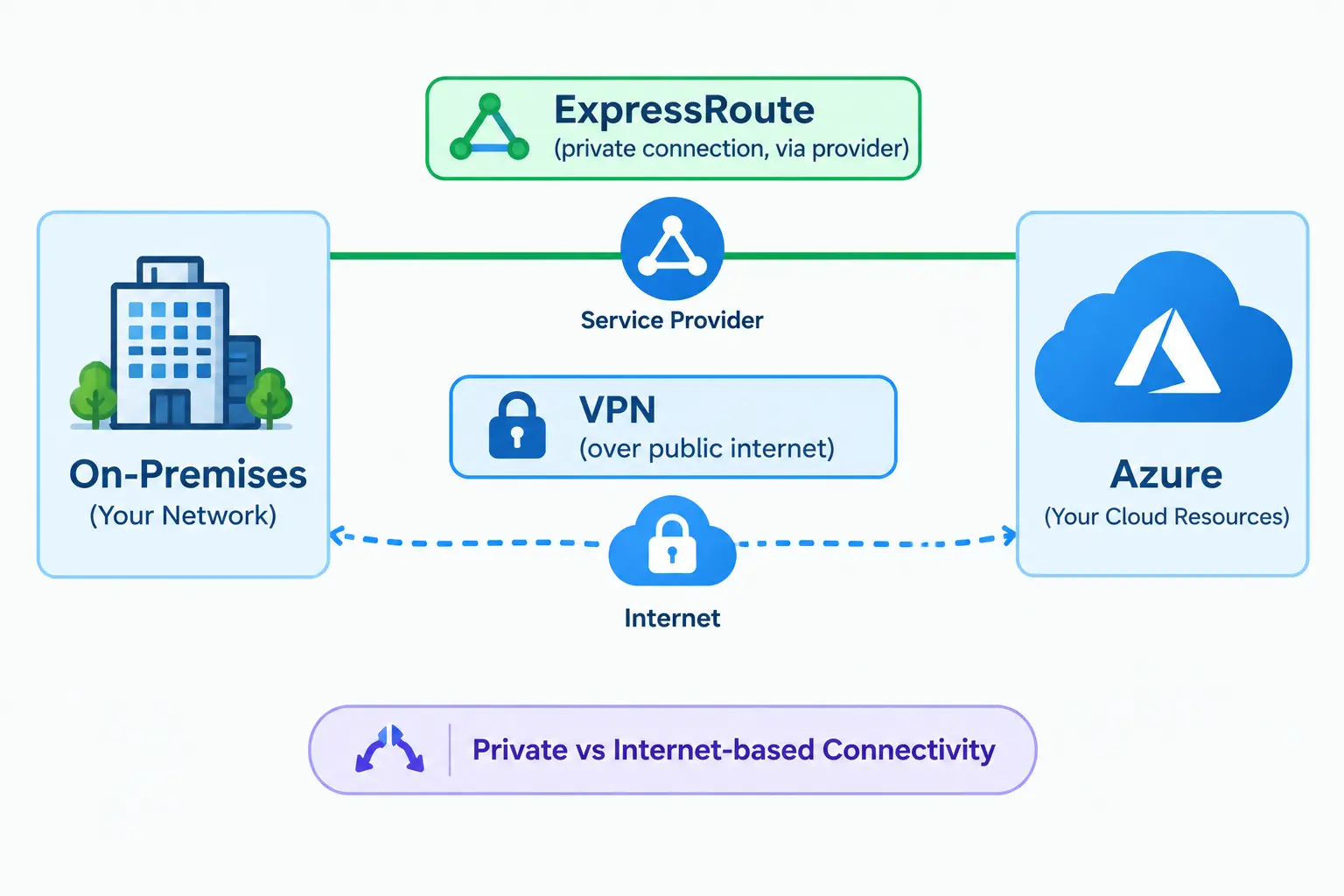
What Is ExpressRoute in Azure?
ExpressRoute is a private connection between your office or data center and Azure. It runs through a connectivity provider, not the public internet. AWS Direct Connect is its closest match.
Compared with a VPN:
- VPN: encrypted, travels over the internet, quick and cheap to set up.
- ExpressRoute: private, steadier speed and delay, but needs a provider and costs more.
A hospital sending big scan files to Azure every day will likely want ExpressRoute for steady performance. A small office reaching a few cloud servers is usually fine with a VPN.
There’s also ExpressRoute Direct, which connects you straight to Microsoft’s network at very high speeds. It’s meant for large organizations with heavy traffic.
How to Choose: AWS or Azure
A few quick checks:
- Your current job: pick the cloud you already touch at work. Real projects teach faster than videos.
- Your target job: open 10 job posts you’d love to get. Count the AWS and Azure mentions.
- Your industry: Microsoft-heavy companies often lean Azure. Startups and tech firms often lean AWS.
- Your experience: AZ-700 is a gentler start. The AWS specialty expects years of work.
- Market share: AWS is the largest, then Azure, then Google Cloud.
Still stuck choosing between cloud networking certifications? Learn one cloud first. IP addressing, routing, VPNs and firewalls work the same way everywhere.
Roadmap for Beginners and Network Engineers
Complete Beginner Path
- Learn the basics: IP addresses, DNS, routing, firewalls.
- Take a starter exam: AWS Cloud Practitioner or Microsoft AZ-900.
- Move to an associate exam, like AWS Solutions Architect Associate.
- Then go for one of the cloud networking certifications, such as AZ-700.
Can you learn Azure with almost no networking background? Yes, but it’ll feel slow. Spend a few weeks on the basics first and everything clicks faster.
CCNA and Network Engineer Path
Already know routing, switching and VPNs from Cisco? You’re ahead of most people. Your job is to learn what the cloud calls those same ideas, and the mapping table above does half of that.
Is going straight to the AWS specialty realistic? For an experienced engineer with real AWS hands-on time, yes. Without that, no. Take an associate exam first. With the deadline close, AZ-700 is often the smarter goal.
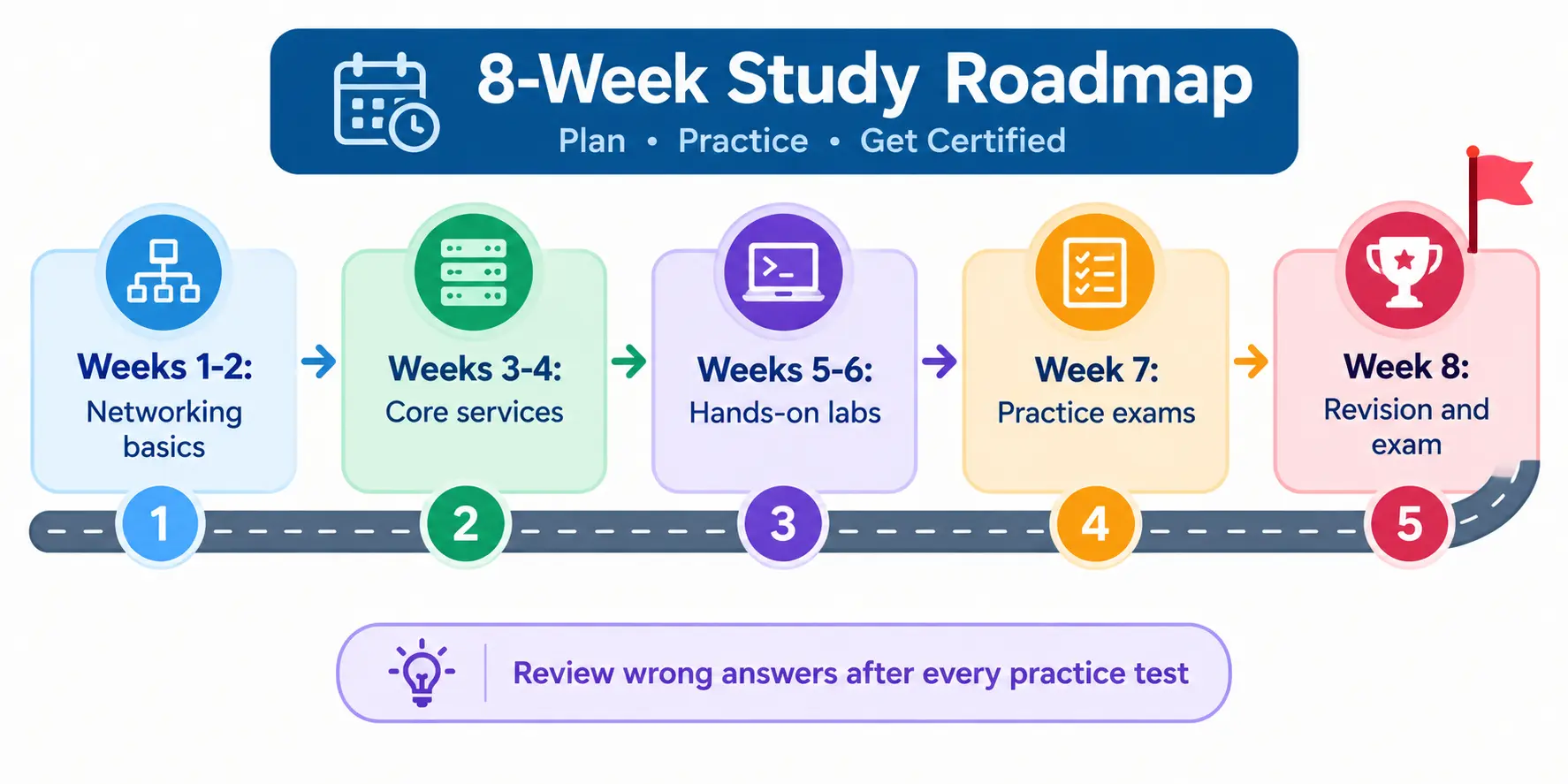
8-Week Study Plan
| Weeks | Focus | What to do |
|---|---|---|
| 1 to 2 | Basics | Revise IP addressing, DNS, routing, VPNs |
| 3 to 4 | Core services | Study VNets or VPCs, peering, gateways, load balancing |
| 5 to 6 | Labs | Build a small network, a VPN and some firewall rules |
| 7 | Practice exams | Take timed tests and list weak spots |
| 8 | Revision | Review notes, rest, sit the exam |
Resources:
- AWS: Skill Builder, the official exam guide, sample questions
- Azure: Microsoft Learn’s AZ-700 path, practice assessment, exam sandbox
- Labs: free-tier or trial accounts
One habit pays off: after each practice test, study only the questions you got wrong. Plenty of candidates say this beat rereading the guide.
Salary and Career Value
Glassdoor showed a median total pay of about $140,000 a year for US cloud computing professionals in February 2026. That figure covers cloud jobs in general, not just networking.
A certificate helps your resume, but it won’t land you a job alone. Hands-on proof counts too. A small lab you can explain in an interview often says more than a badge.
What to Learn Next
- Google Professional Cloud Network Engineer: useful if your company uses Google Cloud or several clouds.
- CompTIA Cloud+: vendor-neutral, covers cloud basics across providers. This version is expected to retire around 2027.
- Cloud security certs: CCSK (about $445) and CCSP suit people moving toward security.
Frequently Asked Questions
What is the best first cloud certification for a beginner?
AWS Cloud Practitioner or Microsoft AZ-900. Both teach core ideas without deep technical experience.
Which cloud certification is best for network engineers?
It depends on your employer’s cloud. AZ-700 fits Azure teams, and AWS networking skills fit AWS teams.
ANS-C01 is retiring. Should I still take it?
Only if you can be ready before December 31, 2026. Earned certifications stay valid for three years.
How do I prepare for the AWS Advanced Networking Specialty exam?
Read the official exam guide, build labs with VPC, Transit Gateway and VPN, then take timed practice tests.
Which is harder: AZ-700 or CCNA?
They test different things. CCNA covers general networking, AZ-700 covers Azure services. Strength in one makes the other easier.
AWS or Azure: which is better to learn?
The one your job or target employer uses. Core networking skills carry over.
Why is AWS Transit Gateway so expensive?
You pay hourly per attachment and per GB processed. Many attachments and heavy traffic push the bill up.
Is ExpressRoute worth it, or is a VPN enough?
ExpressRoute suits steady, high-volume traffic. A VPN is enough for light or occasional use.
Conclusion
The right pick comes down to your job, your experience and your timeline. AZ-700 is a solid, active choice for most people. The AWS specialty is deep and demanding, with a hard deadline. Whichever you choose, build a small lab and practice what you read.
Next step: pick your cloud, open its official exam page, and set an exam date.