
How to Become a Network Engineer in 2026: Complete Roadmap
Back in 2021, one wrong network setting took down Facebook, Instagram, and WhatsApp for six straight hours. Nearly 3 billion people locked out because of a single misconfiguration. That’s the kind of weight a network engineer carries, and it’s a big reason this job keeps showing up on hiring lists no matter what the economy is doing. This guide breaks down exactly how to become a network engineer in 2026 — the actual steps, the skills that matter, and how to start even if you’ve got zero experience right now.
Before You Start
Table of Contents
What Is a Network Engineer?
Put simply, a network engineer builds and maintains the systems that let computers, phones, and servers talk to each other. Take a hospital as an example — doctors pulling up patient records need that connection to work instantly, every time. That’s someone’s job to guarantee, and it’s usually a network engineer’s.
On a typical day, this role involves:
- Designing and setting up networks — routers, switches, firewalls
- Connecting offices, data centers, and remote staff securely
- Watching traffic and catching problems before they become outages
- Patching security holes and managing firewall rules
- Writing scripts to automate the boring, repetitive stuff
Understanding these responsibilities is the first real step in how to become a network engineer — everything else in this guide builds on this foundation.
Network Engineer vs. Administrator vs. Architect
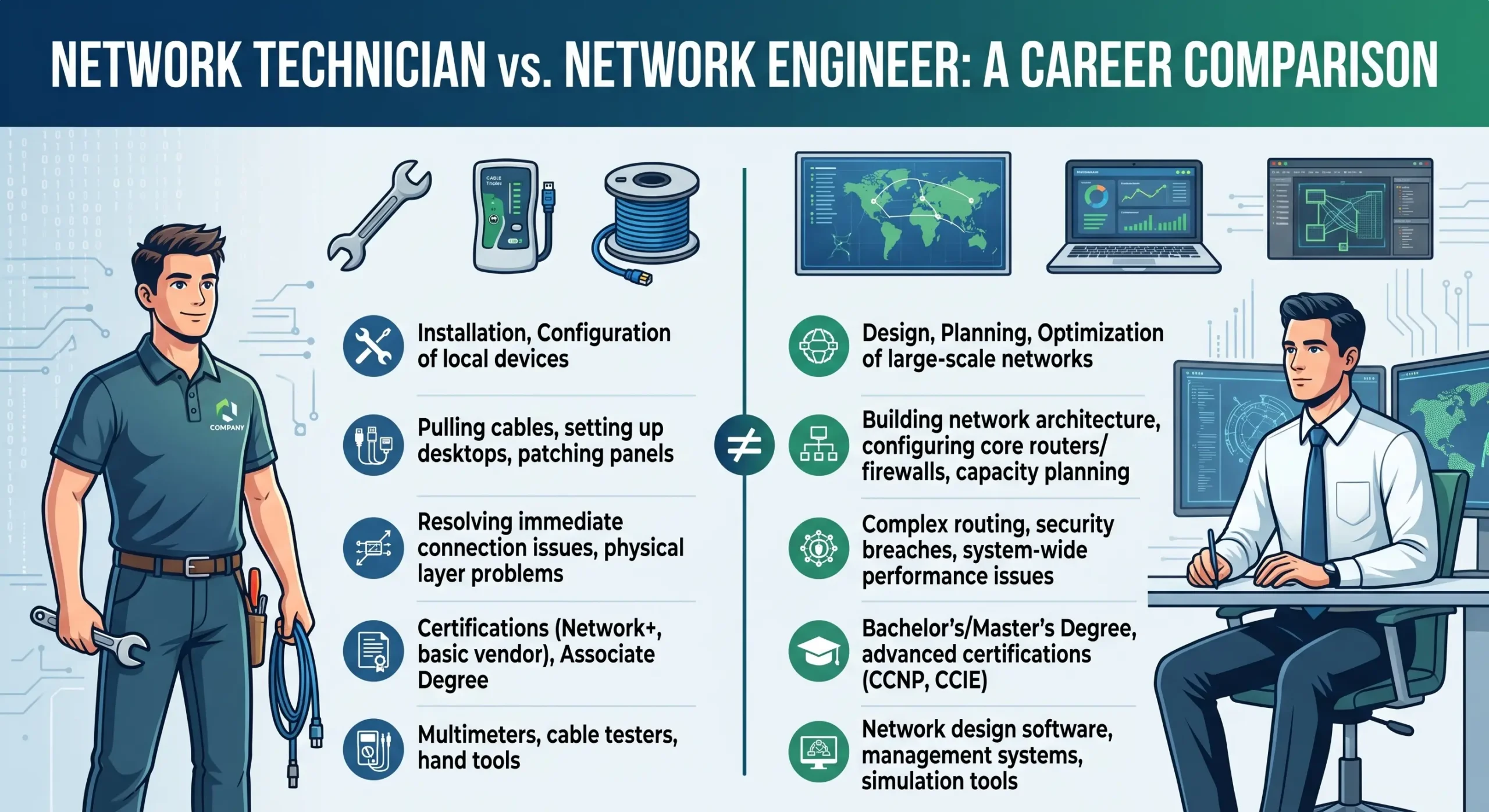
These three titles get used interchangeably a lot, but they’re not really the same thing. A network engineer builds and runs the network day to day. A network administrator keeps an existing setup running smoothly — more upkeep, less building. A network architect draws up the blueprint that engineers then turn into reality. Smaller companies often squeeze all three jobs into one person. Bigger ones split them apart.
Network Technician Job Description at a Glance
Scroll through any job board and most “network technician” or “network engineer” listings ask for a pretty similar mix:
- Configuring routers, switches, and access points
- Running cables and installing hardware by hand
- Figuring out why connections keep dropping
- Documenting setups so the next hire isn’t left guessing
- Using tools like Wireshark, Cisco IOS, and some basic Python or Bash
- Picking up on-call shifts when something breaks at 2 a.m.
That last one is worth flagging early. This isn’t always a clean 9-to-5, especially when you’re new.
Is Becoming a Network Engineer Worth It in 2026?
Short answer, yes. Longer answer, it depends on what you’re okay putting up with.
On the upside, demand hasn’t slowed down. Almost any company past a certain size needs someone managing its network, pay is decent right from the entry level, and there’s a real path forward into security, cloud, or architecture work. A lot of it is remote-friendly too, once you’re past your first year or two.
But there’s a less flattering side worth knowing about. On-call shifts and 2 a.m. outage calls happen. Some weeks are genuinely dull — patching systems, writing documentation, running the same checks. You’ll probably inherit networks built in the 90s that nobody wants to touch. And AI is quietly chewing through the “just follow the manual” side of this job — basic config work, routine monitoring, that kind of thing.
That last part matters more than most guides admit. AI isn’t coming for network engineers as a whole. It’s coming for the ones who only ever learned to follow a checklist without understanding why the network was built that way in the first place. The engineers who actually understand the “why” behind a setup are the ones still getting hired.

How to Become a Network Engineer: Step-by-Step Roadmap
Forget vague advice like “just get experience.” Here’s what the path actually looks like, broken into stages.
Step 1: Learn the Fundamentals First
Before you sign up for any certification, get comfortable with a few core ideas:
- TCP/IP — how data physically moves across a network
- The OSI Model — the 7-layer framework explaining how devices talk to each other
- Subnetting and IP addressing — how networks get divided and organized
- Routing and switching — how traffic actually finds its way from A to B
You can pick most of this up for free on YouTube before spending anything. Channels like Professor Messer and NetworkChuck are a solid place to start.
Step 2: Pick Your First Certification
No, you don’t need a computer science degree to get moving — certifications are usually the fastest route for how to become a network engineer without one. Certifications genuinely carry weight here.
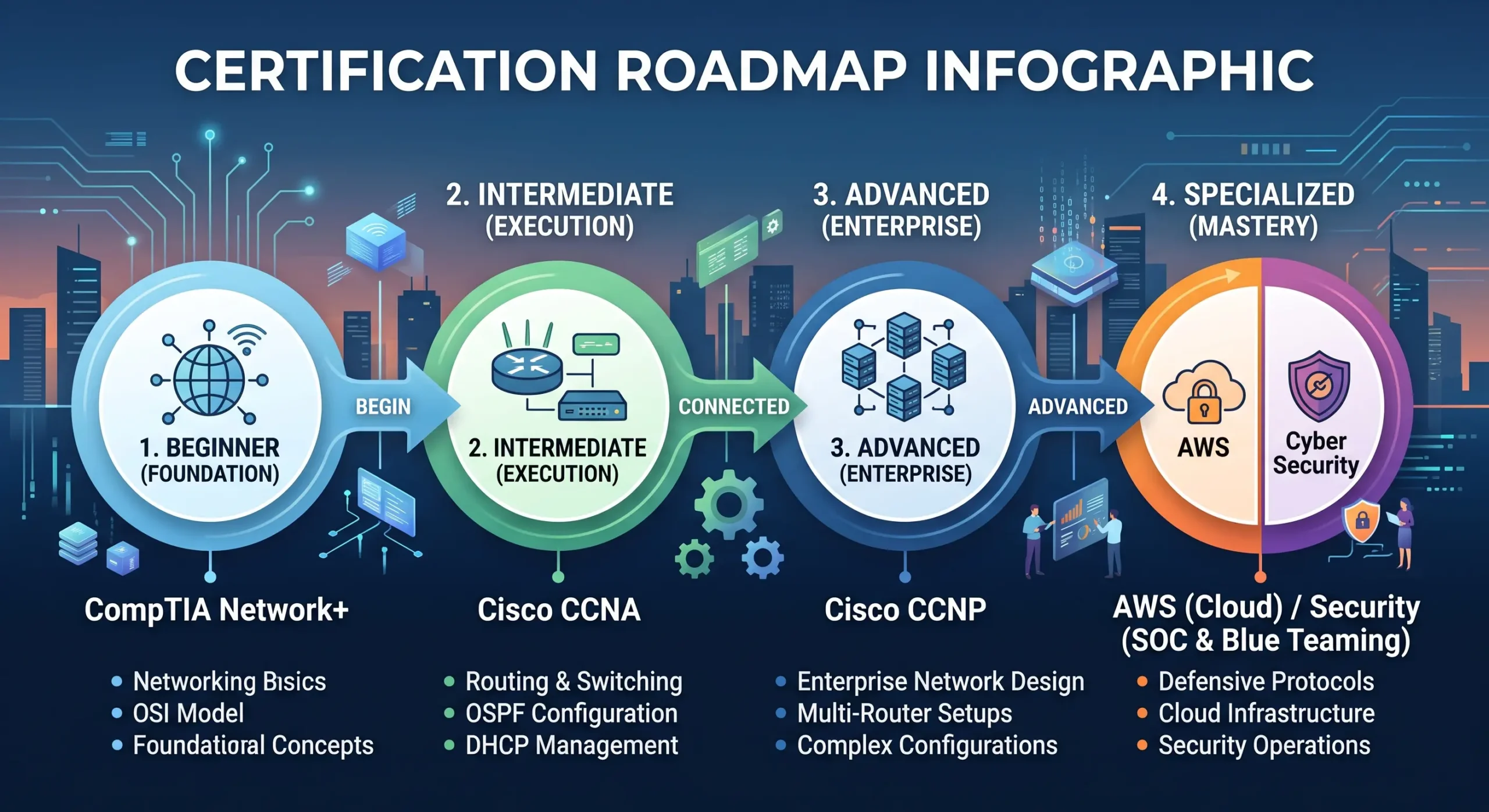
CompTIA Network+ is the usual first stop — it covers the basics with no prerequisites. Cisco’s CCNA comes next, and it’s basically the industry standard; you’ll see it listed on most job postings directly.
If you’ve got a degree, that helps, especially for corporate or government roles. If you don’t, a certification plus a solid portfolio of your own work can take you just as far. Plenty of working network engineers never finished a CS degree at all.
Step 3: Build a Home Lab
This is where the theory actually sticks. And it doesn’t require expensive gear:
- Cisco Packet Tracer — free, beginner-friendly, good enough to start
- GNS3 — a step up, simulates real Cisco hardware
- EVE-NG — for more complex setups once you’re past the basics
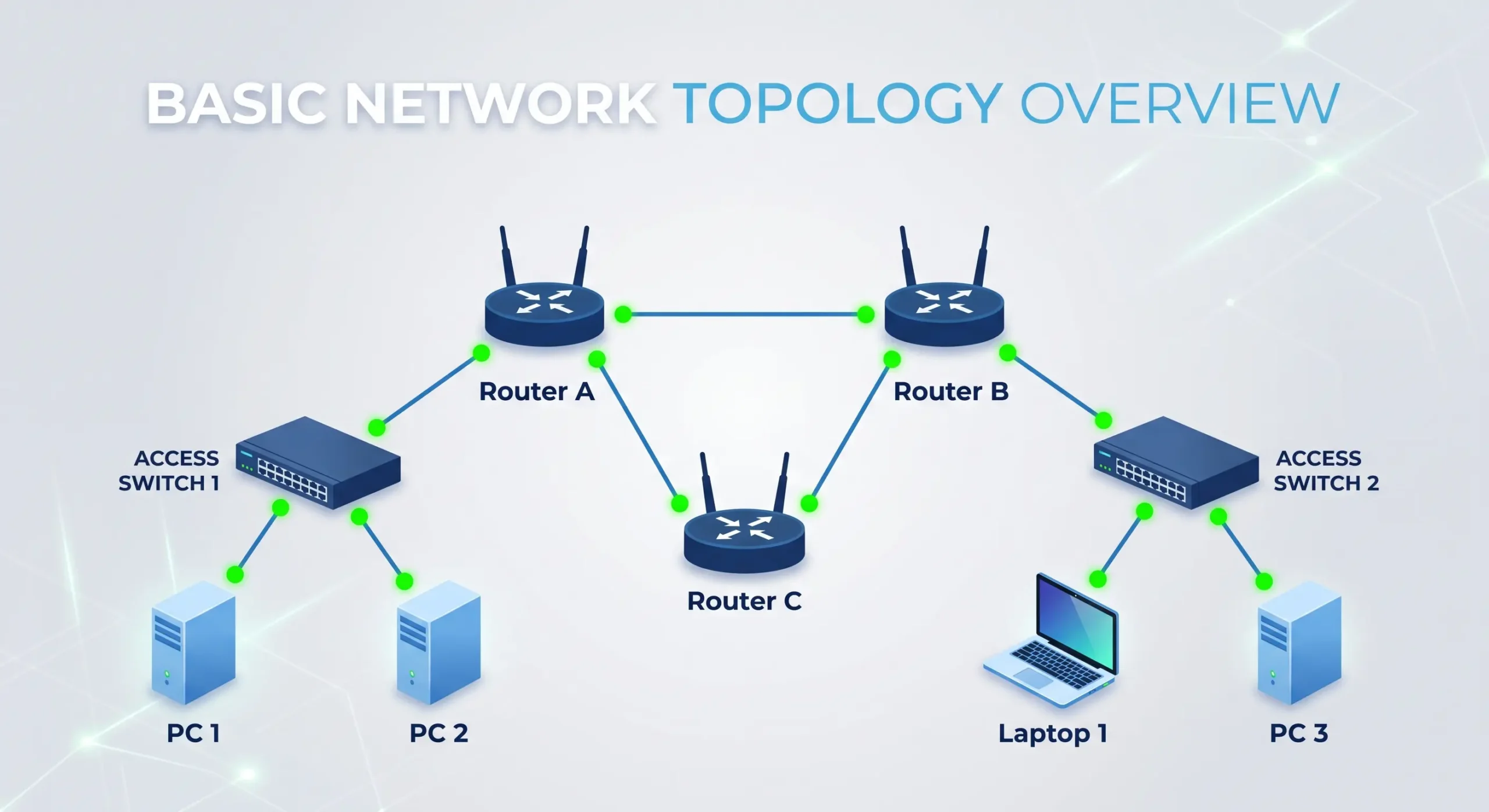
Spend one weekend building a small office network in Packet Tracer — two routers, a switch, a handful of PCs. Break it on purpose. Then fix it. That’s genuinely how most engineers learn.
Step 4: Get Any Networking-Adjacent Job
Your first job title probably won’t say “Network Engineer” anywhere on it, and that’s completely normal. Look at roles like help desk technician, IT support specialist, junior systems administrator, or network technician doing hands-on cabling work. These put you near real infrastructure, which counts for more than another certificate at this stage.
Step 5: Apply for Your First Network Role
Once you’ve got Network+ or CCNA under your belt, plus six months to a year of IT support experience, start applying for junior or associate network engineer roles. Keep your portfolio simple — a few screenshots from your home lab, a short write-up of a problem you actually solved, and your certifications listed clearly.
How to Get Into Networking With No Experience
If you’re figuring out how to become a network engineer with absolutely no background, this is probably the question that brought you here, so let’s not dance around it.
Start unpaid if you have to. Offer to set up the Wi-Fi and network for a small local shop or a relative’s business — it’s real experience, and you can talk about it in interviews without exaggerating anything. Document what you build in your home lab too. A basic GitHub page or even a short blog with three or four write-ups shows employers you can actually do the work, not just pass an exam.
Take the help desk route seriously — it’s not a step down, it’s genuinely how most working network engineers got their start. Join a community like Reddit’s r/networking or the Cisco Learning Network forums, where real job leads and honest beginner advice show up regularly. And don’t wait around for the “perfect” entry-level posting. A lot of jobs labeled entry-level still ask for two years of experience anyway. Apply if you meet even 60 to 70 percent of what’s listed.
Network Engineer Skills You Actually Need
On the technical side, you’ll want a solid handle on networking fundamentals (TCP/IP, DNS, DHCP, routing and switching), firewall and VPN configuration, some basic scripting in Python or Bash to automate repetitive work, and growing familiarity with cloud networking on AWS or Azure — more job postings ask for this every year. Being comfortable reading traffic in Wireshark helps too.
The soft skills matter just as much, maybe more, and they’re the ones people tend to skip. Writing clear documentation saves you and your teammates hours later. Staying calm during an outage instead of panicking is a skill in itself. So is explaining a technical problem to a manager who just wants to know why the internet is down. And honestly, knowing when to ask for help instead of burning six hours stuck on one issue — that alone separates people who move up quickly from people who stall out.
Best Certifications for Network Engineers
| Certification | What It Covers | Best For |
| CompTIA Network+ | Networking basics, protocols, troubleshooting | Complete beginners |
| Cisco CCNA | Routing, switching, network infrastructure | Entry to mid-level, most in-demand |
| Cisco CCNP | Advanced routing/switching, troubleshooting | 2+ years experience |
| AWS Advanced Networking | Cloud-based network design | Cloud-focused roles |
| CWNA | Wireless network administration | Wireless specialists |
If you’re brand new, start with Network+. If you already know the basics, jump straight to CCNA.
Network Engineer Salary by Experience Level
- Entry-level: $71,000 – $85,000 per year
- Mid-level: $84,000 – $99,000 per year
- Senior-level: $104,000 – $139,000+ per year
These numbers shift depending on location, certifications, and whether you specialize somewhere in demand, like cloud networking or security.

Interview Tips for Your First Network Engineer Job
Expect scenario questions like “walk me through troubleshooting a device that won’t connect.” Practice thinking out loud, not just landing on the right answer. Bring your home lab into the conversation too — saying “I built a small network in Packet Tracer with VLANs and a firewall” shows initiative even without a job history to point to.
Know your subnetting cold; it comes up in almost every technical interview, even for entry-level roles. And ask a few questions back — about the team’s tools, on-call rotation, what a normal week actually looks like. It shows you’re thinking about the job long-term, not just trying to get any offer.
Frequently Asked Questions
Is becoming a network engineer worth it?
For most people, yes. Pay is solid, demand is steady, and there’s a real path into security or cloud work down the line. Just go in knowing on-call work and routine troubleshooting come with the territory.
How do I get into networking with no experience?
Start with a help desk or IT support role, build a home lab to show you can actually do the work, and pick up Network+ or CCNA. Document your lab projects so you have something concrete to show in interviews.
Can I become a network engineer without a degree or certification?
A degree isn’t required, but you’ll usually still need at least one certification plus hands-on experience to get hired without one. Skipping both makes it a much harder climb.
What does a typical day look like for a network engineer?
Mostly a mix of monitoring dashboards, fixing connectivity issues, configuring hardware, and occasionally dropping everything when something breaks. Some days are routine, others aren’t.
How difficult is network engineering as a career?
The learning curve is steep at the start — subnetting and protocols take real practice before they click. A year or two in, it gets more manageable, especially if you’ve kept building your lab skills along the way.
What skills do network engineers need that people often overlook?
Clear documentation and staying level-headed during outages. Technical skills get you hired. These two are usually what gets you promoted.
What is the scope of network engineering as a career?
It’s growing steadily, and the growth is shifting toward cloud networking, automation, and security work. The U.S. Bureau of Labor Statistics projects 13% growth for network engineers and architects through 2033, well above the average for most careers.
Conclusion
When it comes to how to become a network engineer, it isn’t about stacking up every certification you can find. It’s about learning the fundamentals, getting your hands dirty in a home lab, and taking whatever entry point gets you close to real networks, even if the job title isn’t glamorous yet. Start with Network+, build something this week, and the rest of this roadmap will make a lot more sense once you’re actually doing the work.